LiFi Tech News Take On pureLiFi Recent Webinar About Bridge XC Flex
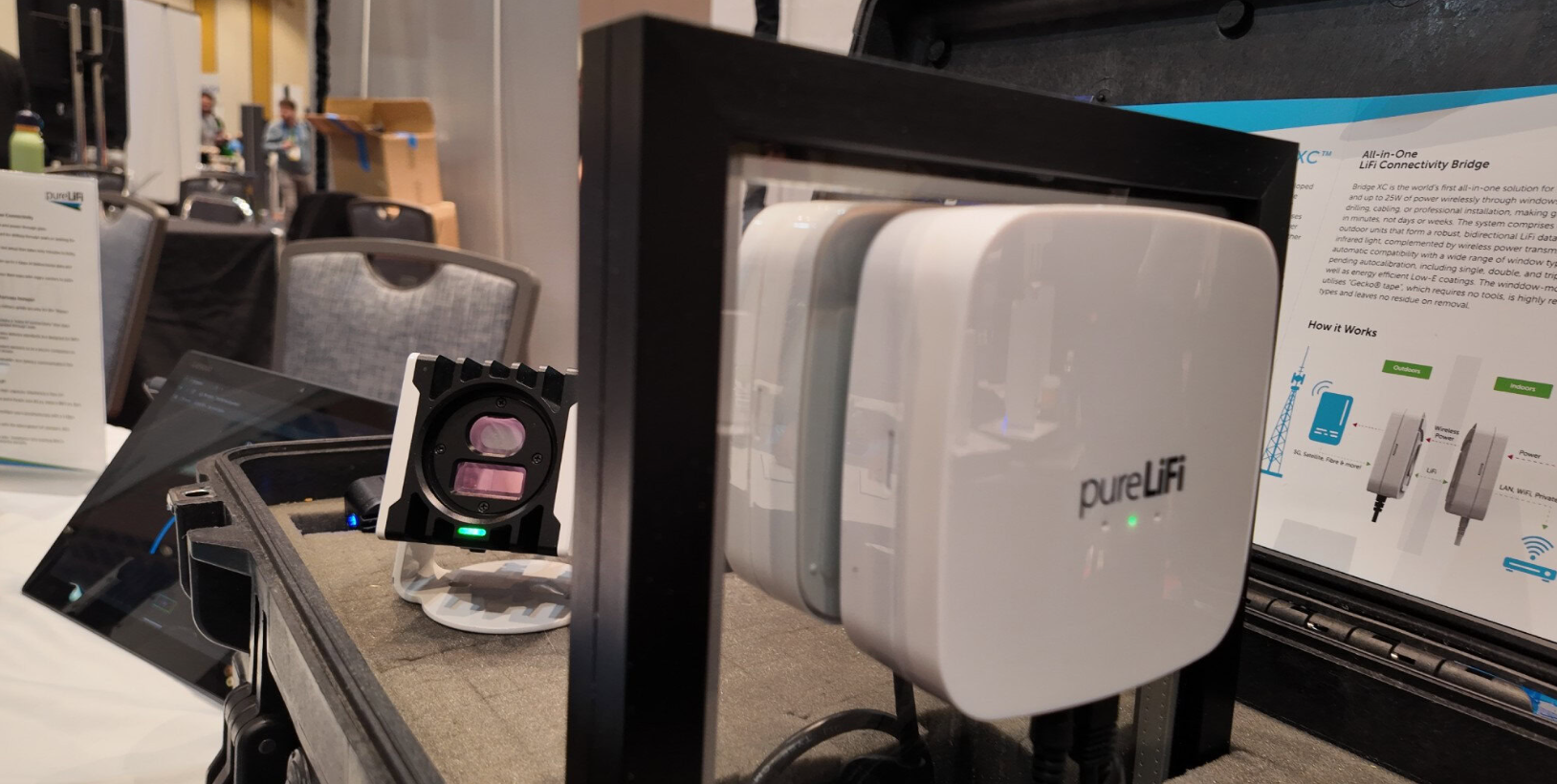
Image credit to Android Authority
First and foremost, it is important to give credit where credit is due: I commend pureLiFi for hosting this webinar. In an era where many tech firms have retreated into press-release-only communication, taking the time to present their innovations directly to the community is a positive step. The webinar provided an invaluable, high-level look at their latest developments. Watching the team walk through the technical capabilities of their hardware was a reminder of why they remain a leader in this space. They showcased a clear mastery of the physics behind LiFi, and for a tech enthusiast, witnessing that level of professional dedication and R&D rigour is always an encouraging experience. A very big thank you to pureLiFi’s Commercial Lead, Bart Bowser, and Co-Founder and Chief Product & Technical Officer, Mustafa Afghani for a thorough walkthrough of the Bridge XC Flex.
The Bridge XC Flex: An Enterprise Enigma?
The centrepiece of the discussion, and the source of much of the audience's curiosity, was the Bridge XC Flex. On paper, pureLiFi's hardware represents a significant leap forward in shrinking LiFi components and making them viable for seamless integration into everyday devices. But viability and an actual market strategy are two very different beasts.
During the webinar, pureLiFi did not provide granular details regarding their roadmap for the Bridge XC Flex, specifically concerning the consumer market. Are there definitive plans to bring this technology directly into the hands of everyday users, or is it destined to remain siloed in specialised industries?
The most critical question for any consumer or prosumer was left completely unaddressed: pricing. We still do not know the expected retail price or OEM integration cost of the Bridge XC Flex. Based on the current trajectory of LiFi manufacturing, the bespoke nature of the optical components, and the stark lack of mass-market economies of scale, I personally believe this will not be a cheap product. If the Bridge XC Flex carries a premium, enterprise-level price tag, it inherently locks out the broader consumer base, keeping LiFi positioned as a niche luxury rather than a ubiquitous, household utility.
Are LiFi Companies Playing It Safe?
The ambiguity surrounding the Bridge XC Flex is symptomatic of a much larger, industry-wide hesitation. It begs a critical question that everyone in this sector needs to ask: When will LiFi companies truly consider developing and marketing products for the masses?
Currently, the broader LiFi sector appears to be playing it incredibly safe. The focus remains heavily skewed toward defence, aerospace, high-security government facilities, and niche enterprise applications. It is easy to understand the business logic behind this conservative strategy. These sectors are willing to pay a massive premium for the unique benefits of LiFi, namely, the lack of electromagnetic interference (EMI) and localised, intercept-proof data transmission. The profit margins are high, and the client base, while small, is lucrative and reliable.
However, playing it safe comes at a steep cost to the technology's overall evolution. By neglecting the consumer market, LiFi companies are missing out on the rapid iteration, massive scale, and public mindshare that originally propelled Wi-Fi to global dominance. The consumer market is undeniably difficult. It demands low price points, frictionless user experiences, aesthetic design, and seamless interoperability. It requires massive capital investment in consumer education and marketing. But it is also the only path to true technological ubiquity.
The Road Ahead: Breaking the Niche Ceiling
If LiFi is ever to realise its full potential, the industry must eventually cross the chasm from enterprise-exclusive to consumer-ready. We need bold moves from companies like pureLiFi, Oledcomm, Signify and other ones involved in the LiFi space. We need products that are not just conceptually brilliant in a webinar slide deck, but accessible, affordable, and readily available on the shelves of everyday electronics retailers.
Until LiFi manufacturers are willing to take the financial and strategic risks associated with consumer hardware, the technology will remain perpetually "five years away" from mainstream adoption. The recent pureLiFi webinar was undeniably a showcase of impressive engineering, but it also served as a stark reminder of the industry's current, self-imposed limitations.
For the loyal followers of LiFi Tech News and the tech community at large, we will continue to watch, report, and push for the answers that were noticeably absent today. The light is certainly there, but we are still waiting to see if these companies are actually willing to let the everyday consumer flip the switch.