100 Gbps LiFi: Breaking the Speed Barrier with Laser-Based Wireless Communication
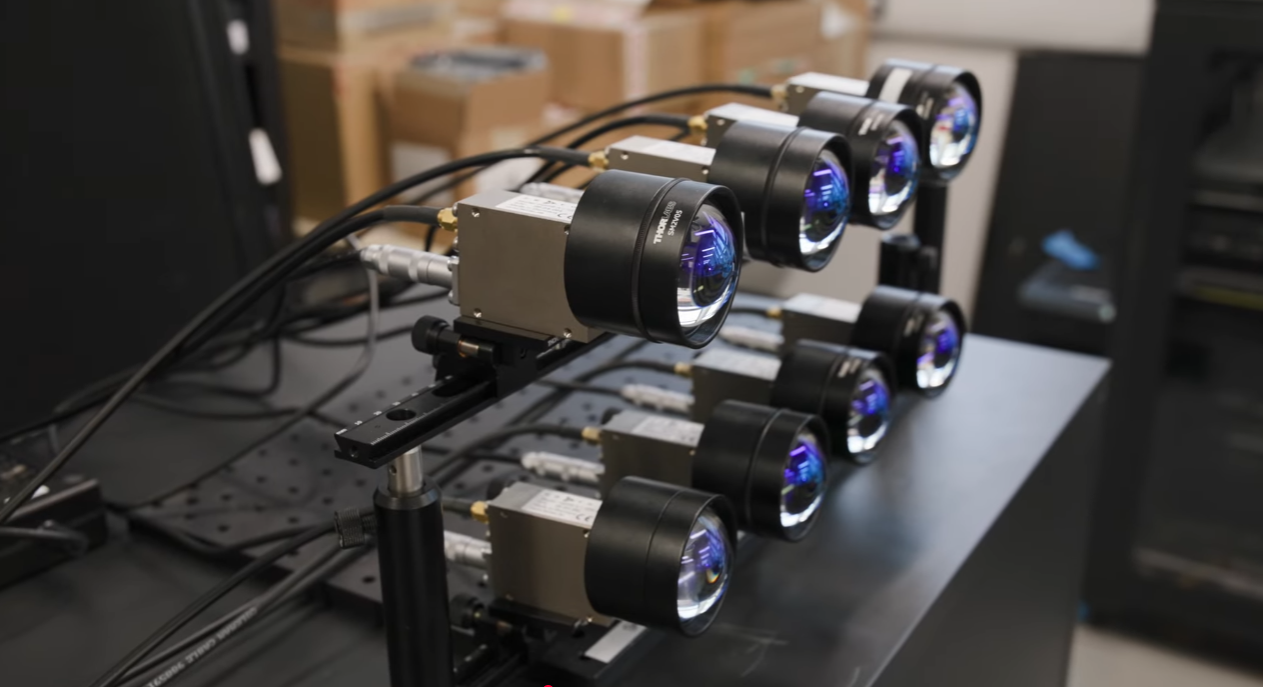
Image credit to TITAN Telecoms Hub
At the LiFi Research and Development Centre at the University of Cambridge, the Cambridge team showcased ultra-fast data rates exceeding 100 Gbps using a state-of-the-art Wavelength Division Multiplexing (WDM) system paired with high-brightness, high-bandwidth laser sources.
Why the Shift to Light?
The optical spectrum, which spans from ultraviolet light down to infrared, and includes the entire visible light spectrum, is a massive, untapped resource. It is approximately 3,000 times larger than the entire radio spectrum. This vast, license-free bandwidth is the primary motivation for developing optical wireless systems.
Beyond raw speed and bandwidth, LiFi offers a multitude of distinct advantages:
Unmatched Security: Because light cannot pass through walls, data streams remain strictly confined to the room they are in, making interception from the outside nearly impossible.
Limitless Versatility: While it serves as a powerful indoor alternative to Wi-Fi, LiFi is uniquely suited for environments where RF fails. It can be used for underwater communication, connecting aerial platforms like drones, and seamlessly linking ground stations with satellites.
Sustainability and Efficiency: By using off-the-shelf devices and requiring less power, LiFi technology paves the way for highly scalable, low-cost, and Net Zero wireless communication networks.
What’s Inside the Experiment?
To break the 100 Gbps barrier, the Cambridge team engineered a highly sophisticated WDM system. Here is a look under the hood at the core components of this remarkable demonstration:
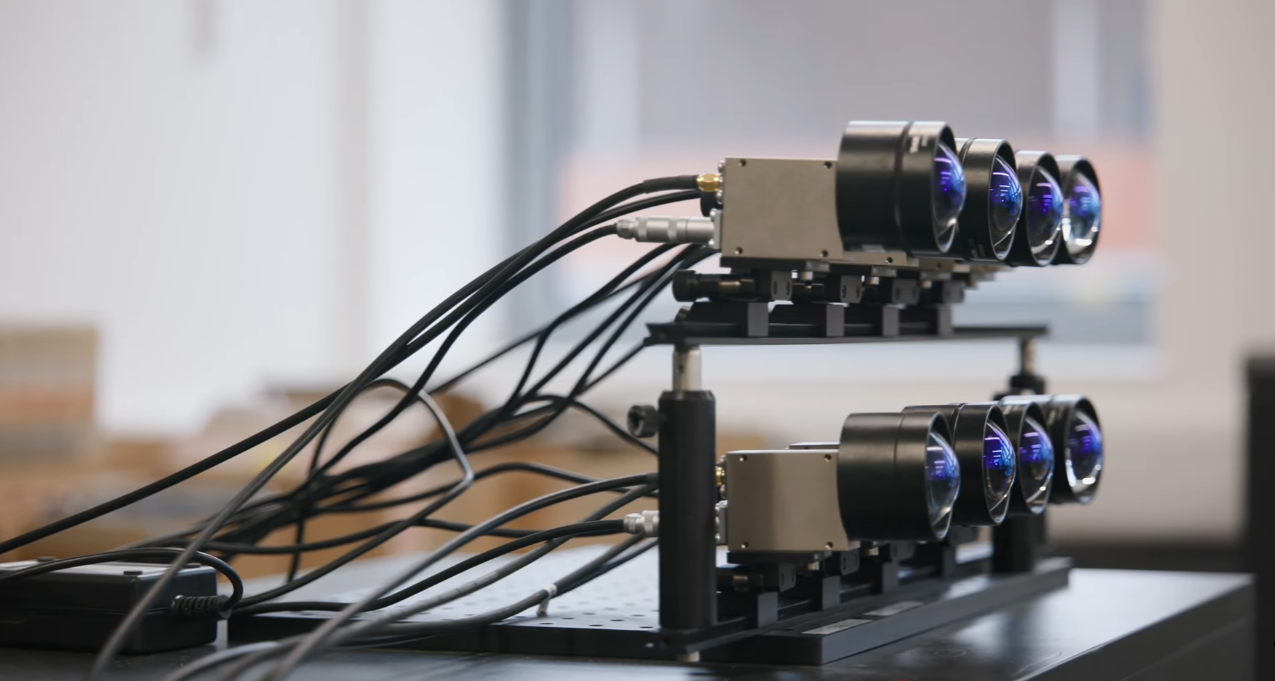
Image credit to TITAN Telecoms Hub
1. The 10-Channel Laser Emitter Architecture
Standard LiFi systems often rely on off-the-shelf LED bulbs, which have severe bandwidth limitations. To push past 100 Gbps, the Cambridge team used custom surface-mounted laser diodes, which can switch on and off exponentially faster than LEDs.
Dual-Diode Packages: The emitters use specialised packages containing two distinct laser diodes.
Illumination (The Blue/Phosphor Mechanism): The first is a 450-nanometer blue laser. This blue light is directed at a central phosphor reflector. The phosphor absorbs a portion of the blue light and converts it to yellow. The combination of the remaining blue light and the new yellow light creates the brilliant, standard white light needed to illuminate a room.
Data Transmission (The WDM Array): The second diode in the package is dedicated entirely to high-speed data. Across the system, these secondary diodes are manufactured using different material compositions so that each emits a slightly different wavelength (colour) of light. By clustering 10 of these distinct wavelengths together, the system establishes 10 independent communication channels. Because they are different colours, they travel through the air in parallel without interfering with one another, each transmitting roughly 10 Gbps.
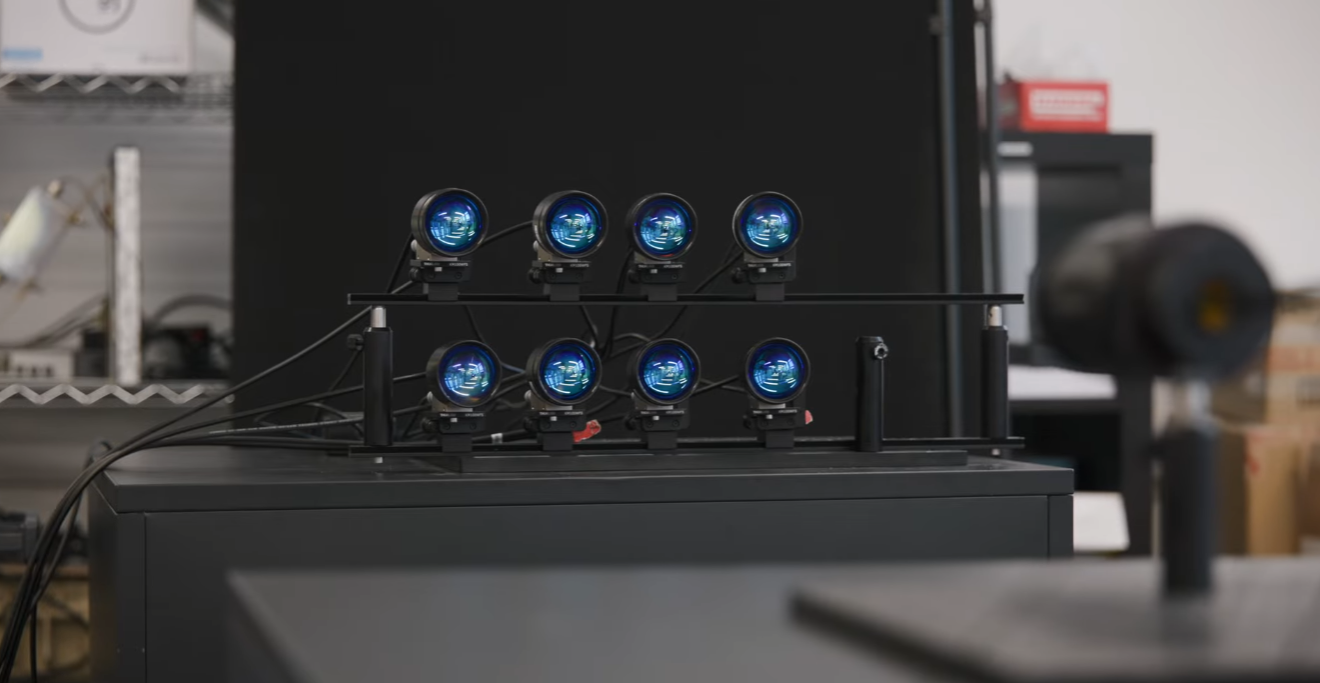
Image credit to TITAN Telecoms Hub
2. Fibre-Bundle Optical Transmission for Signal Aggregation
Transmitting 10 separate laser sources directly into free space could lead to beam divergence, spatial misalignment, and a fragmented signal.
Funneling the Light: To solve this, the engineers introduced a fibre-optic bundle between the laser emitters and the transmission lens.
Unified Delivery: This bundle physically collects the light from the spaced-out surface-mounted packages and seamlessly combines them into a single, tightly focused optical path. This ensures that the 10 distinct wavelengths are blended perfectly into a unified beam before being broadcast across the room, preserving intense optical power and maintaining exceptional signal integrity.
3. The 2×5 Photodiode Array and Narrow-Band Optical Filtering
On the receiving end (which would eventually be integrated into a laptop, smartphone, or dongle), the transmitted light must be captured and translated back into digital data.
Precision Receivers: The hardware used a highly sensitive 2×5 array of photodiodes, mathematically mirroring the 10 transmission channels.
Eradicating Crosstalk: In any WDM system, the greatest threat to data speed is "crosstalk", when the receiver accidentally picks up light from adjacent channels, scrambling the data. To solve this, each of the 10 photodiodes is equipped with a specialised narrow-band optical filter. These filters act as highly precise physical firewalls; they allow only one specific wavelength of light to pass through to its respective photodiode, reflecting away the other nine wavelengths as well as ambient room light. This results in pristine, noise-free signal reception.
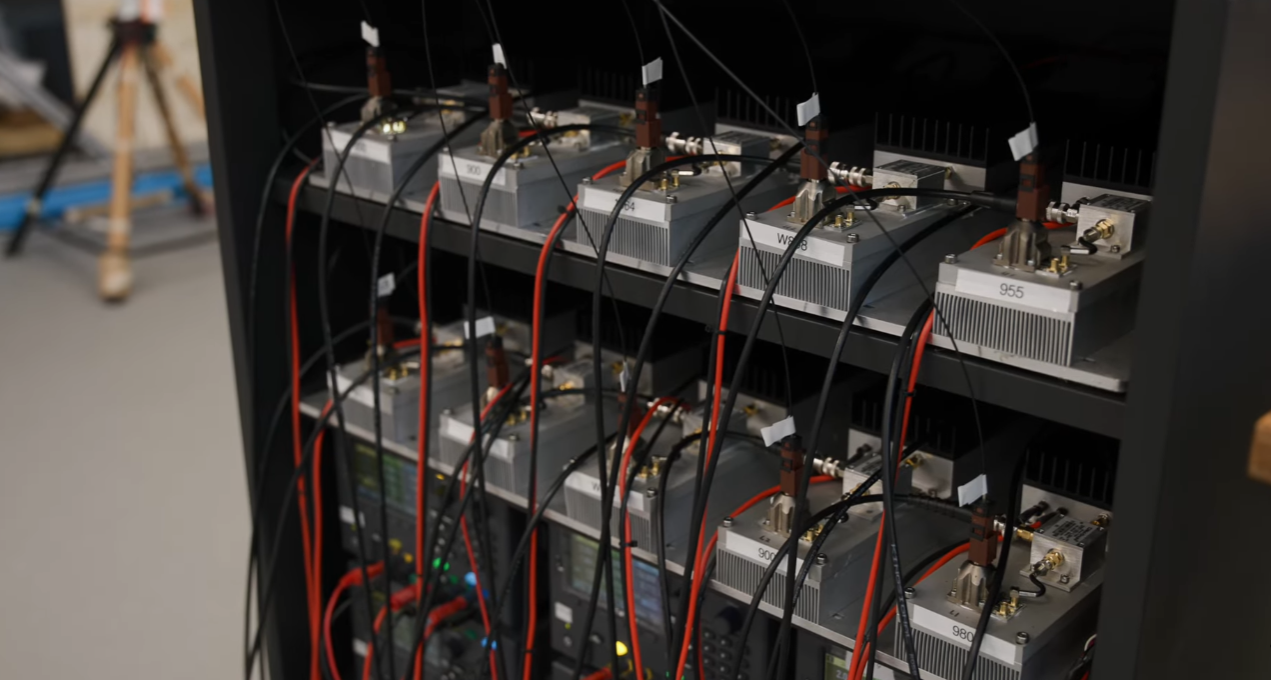
Image credit to TITAN Telecoms Hub
4. Advanced Digital Signal Processing (DSP)
Hardware alone cannot sustain 100 Gbps speeds; it requires highly complex software algorithms continuously running in the background to clean and optimise the data streams.
Combating Nonlinearity: High-brightness lasers do not always convert electrical current into light in a perfectly linear fashion, which can distort the data at ultra-high speeds. The system’s DSP applies advanced equalisation algorithms to mathematically reverse these distortions at the receiver level.
Temperature Compensation: Laser diodes are highly sensitive to heat. As they operate, temperature fluctuations can cause their output wavelengths to drift slightly. The DSP actively monitors the incoming signal and compensates for these real-time thermal variations to prevent the connection from dropping.
Adaptive Bit-Loading: The system constantly analyses the Signal-to-Noise Ratio (SNR) of all 10 channels. Using techniques like Orthogonal Frequency Division Multiplexing (OFDM), the DSP dynamically applies "bit-loading." If one wavelength channel is perfectly clear, the algorithm packs more data bits into that channel. If a different channel experiences slight interference, it reduces the data load on that specific colour. This dynamic balancing ensures the system is always operating at absolute peak efficiency to maintain the 100 Gbps aggregate throughput.

Image credit to TITAN Telecoms Hub
Optical Connectivity
LiFi presents a brilliant complimentary solution to traditional radio frequency technologies. One of its greatest strengths is its ability to piggyback on existing infrastructure. By using the light fixtures already present in our homes, offices, vehicles, and even traffic signals, we can leverage a single infrastructure for both brilliant illumination and ultra-fast data communication.
With 100 Gbps speeds now successfully demonstrated in the Cambridge laboratory, the next generation of wireless connectivity is no longer just a concept.
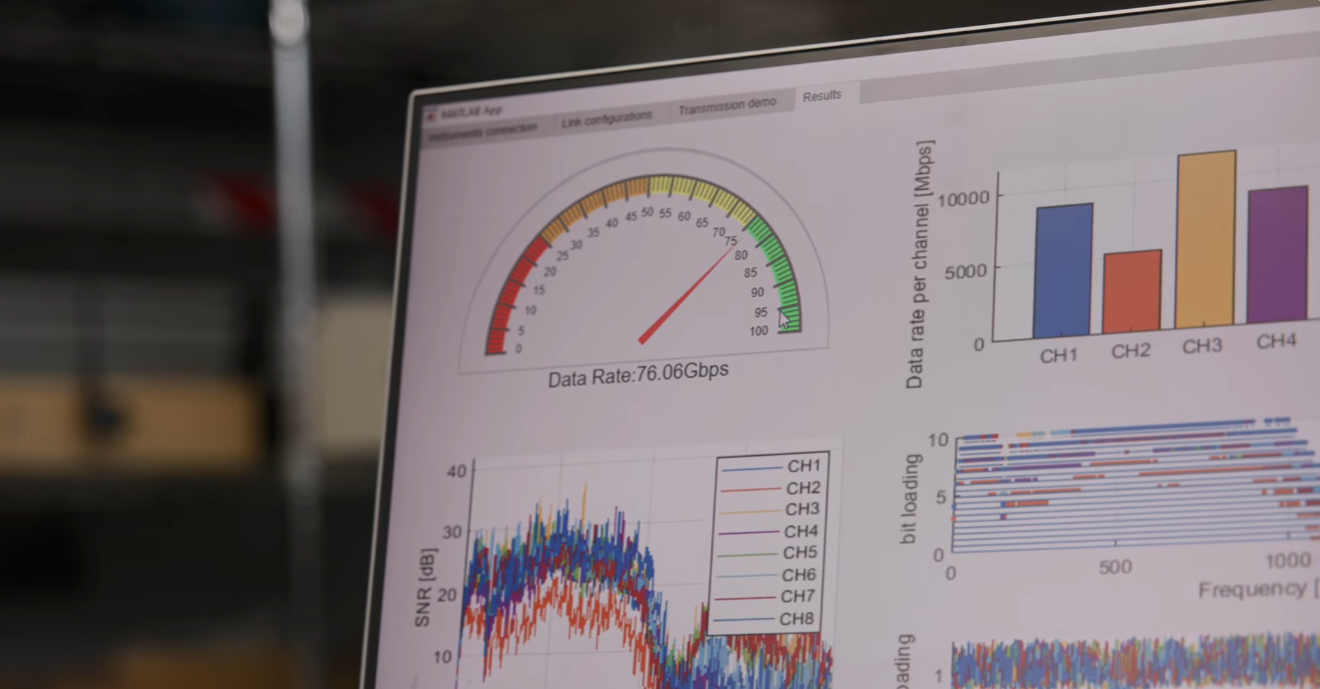
Image credit to TITAN Telecoms Hub