Does LiFi Work With the Lights Turned Down or Off?
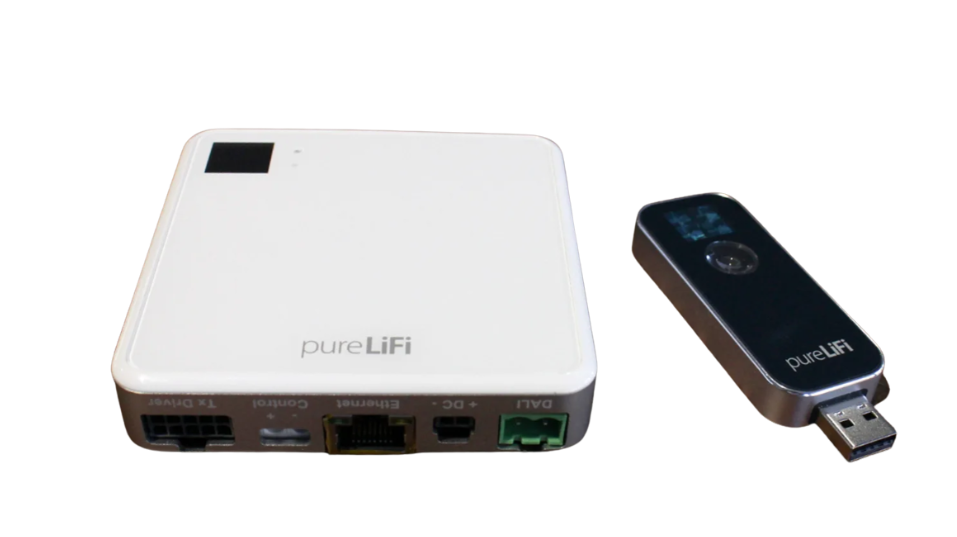
pureLiFi XC
One of the most obvious and frequently asked question about LiFi is: “Does LiFi still work if you turn the lights down or completely off?”
The short answer is yes, but the way it achieves this depends heavily on the specific type of LiFi system being used. Let's explore how some LiFi engineers have solved the "dark room" problem through extreme dimming, imperceptible light pulses, and the shift to the invisible infrared spectrum.
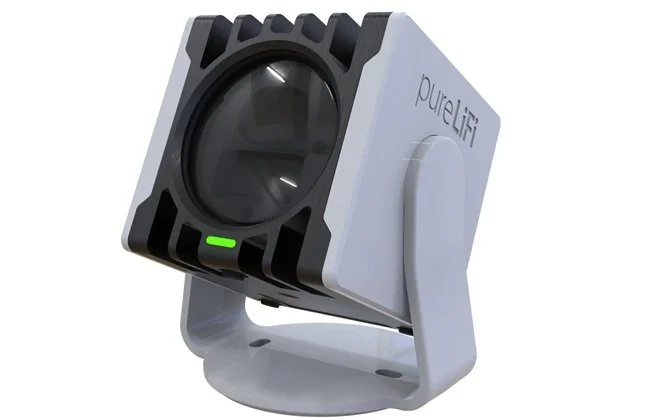
Credit to pureLiFi - LiFiCube
The Visible Light Workaround: Dimming to the Extreme
At its most basic level, traditional Visible Light Communication (VLC) requires exactly what the name implies: visible light. If you completely cut the power to a standard visible-light LiFi bulb, the data transmission stops.
However, technology companies have engineered a highly effective workaround. LiFi LEDs can be dimmed to levels so low that, to the human eye, the room appears effectively dark, yet the bulbs continue to transmit data seamlessly.
Research into VLC technology reveals that devices can maintain consistent data performance even when room illumination drops to between 10 and 90 percent. For instance, systems like pureLiFi’s LiFi-XC or the Kitefin System can sustain communication at light levels down to just 60 lux.
To put that into perspective:
400 lux: The British standard minimum light level for reading.
250 lux: The average illumination of a standard office or classroom.
150 lux: The ambient lighting in a movie theater.
At 60 lux, the room is dim enough for a presentation, sleeping, or watching a movie, but the LEDs are still pulsing fast enough to keep your devices connected to the network.
The DarkLight Project: Hiding Data in Plain Sight
What if you want the lights to look completely turned off without moving away from standard commercial LEDs? A few years ago, researchers at Dartmouth College introduced an experimental project called DarkLight to tackle this exact limitation.
Traditional LiFi requires a steady stream of visible illumination, which can waste energy and create annoying glare if you are trying to use your devices in a dark room or on a bright sunny day when indoor lighting isn't necessary. DarkLight bypassed this by altering how the light pulses are delivered.
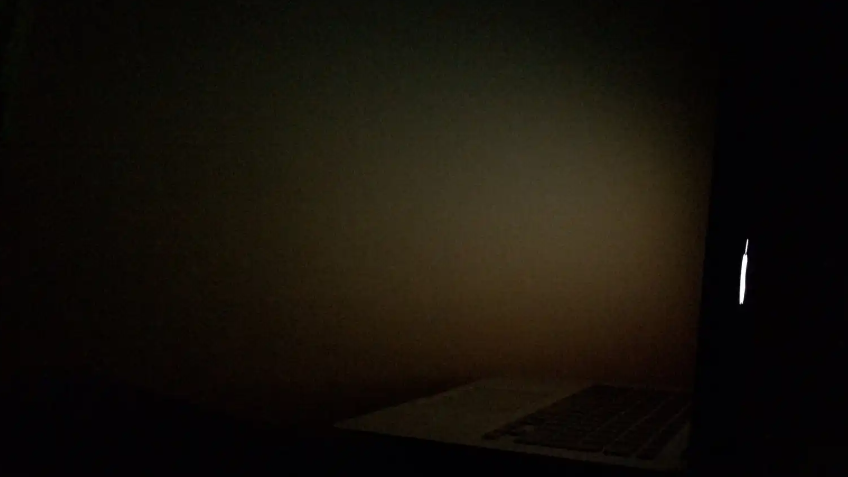
Credit: Danny Hope
How DarkLight Enhances LiFi
Imperceptible Pulses: DarkLight encodes data into ultra-short, microsecond flashes of light. Because these highly frequent pulses are so incredibly brief, the human eye perceives them as total darkness or an "off" state.
No Visible Glare: It removes the need for steady, visible illumination, saving energy and eliminating user annoyance.
Low-Cost Integration: Instead of requiring separate, specialized infrared infrastructure, DarkLight was designed to function using inexpensive, off-the-shelf commercial LEDs and standard photodiodes.
Current Limitations of DarkLight
While groundbreaking, DarkLight remains largely an experimental communication primitive rather than a mass-market product. Because the light pulses are so short, early prototypes achieved much lower data rates, around 1.6 Kbps over short ranges of 1.3 to 1.8 meters. This is vastly slower than traditional high-speed LiFi or Wi-Fi, keeping it in the research stage for now.
The Ultimate Solution: The Invisible Spectrum (Infrared)
While extreme dimming and imperceptible pulses are brilliant engineering feats, the commercial LiFi market has largely solved the "lights off" problem by moving outside the visible spectrum entirely.
Today, the most advanced LiFi systems use Infrared (IR) light for both the uplink and downlink. Because infrared light is completely invisible to the human eye, an infrared LiFi access point requires zero visible illumination to transmit data.
Leading companies in the optical communication space have heavily adopted this standard:
pureLiFi: Their newest consumer-ready components, such as the Light Antenna ONE (compliant with the IEEE 802.11bb global standard), the LiFi@Home system, and the LiFi Cube, rely entirely on infrared for communication. You can sit in a pitch-black room, and your internet connection will remain incredibly fast and perfectly stable.
Signify (Trulifi): Systems like the Trulifi 6002 series transmit data modulated over infrared light. As light cannot travel through walls, this guarantees the data won't leave the room, while also ensuring the system works identically whether the room's visible overhead lights are glaringly bright or completely shut off.
Other Vendors: Starter kits and enterprise solutions from brands like LiFIMAX and Aerolifi also use infrared technology to provide a true "lights off" networking experience.
The Verdict
If you are using an older or specific visible-light system, turning the power switch completely off will kill your internet connection. However, thanks to extreme dimming capabilities down to 60 lux, you can still maintain a connection in what feels like a dark room.
But if you are looking toward the future of the technology, the concern over room lighting is obsolete. With modern infrared LiFi access points, your lights can stay completely off while you enjoy gigabit speeds in the dark.
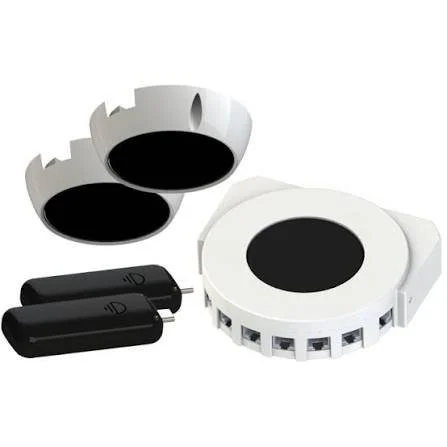
USB C LiFi Dongle