How does the 802.11bb LiFi standard work with existing Wi-Fi networks?
Credit to pureLiFi
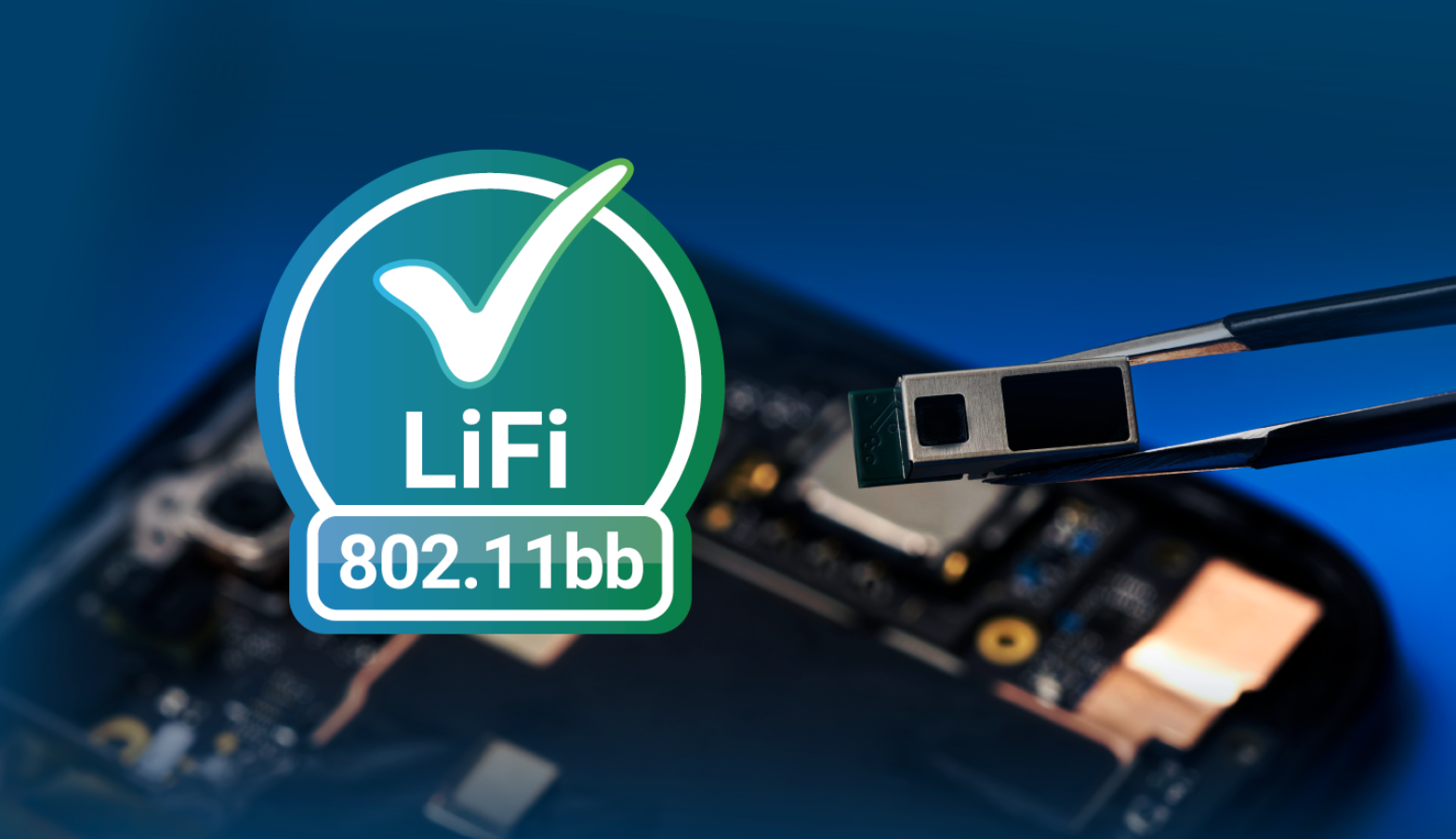
The true breakthrough of the IEEE 802.11bb standard isn't just that it uses light to transmit data—it’s how cleverly it piggybacks on the existing Wi-Fi ecosystem.
Before 802.11bb, light-based networking standards (like IEEE 802.15.7) were completely separate from Wi-Fi. This meant that adopting LiFi required entirely different network controllers, proprietary software, and complex translation systems.
The 802.11bb standard solved this by integrating LiFi directly into the ubiquitous 802.11 Wi-Fi family. It achieves this seamless integration by splitting the network architecture into two distinct layers: the PHY (Physical) layer and the MAC (Medium Access Control) layer.
1. The PHY Layer: Swapping Radio for Light
The Physical (PHY) layer is the hardware level where the actual transmission medium is defined.
In standard Wi-Fi (802.11ax/Wi-Fi 6): The PHY layer translates data into radio frequencies (like 2.4 GHz or 5 GHz) and blasts them out through an antenna.
In LiFi (802.11bb): The standard defines a new PHY layer. Instead of an antenna, data is sent to an optical transceiver that modulates the data into near-infrared light pulses.
2. The MAC Layer: The Shared "Traffic Cop"
The Medium Access Control (MAC) layer sits directly above the PHY layer. It acts as the network's traffic cop—it handles device addressing (MAC addresses), packages the data into frames, avoids data collisions, and controls when a device is allowed to transmit.
Here is the genius of 802.11bb: It uses the exact same MAC layer as standard Wi-Fi.
Instead of rewriting the rules for how data is packaged and managed, 802.11bb simply takes standard Wi-Fi traffic and hands it off to a light-based PHY layer instead of a radio-based one.
Why This Shared Architecture is a Game Changer
By sharing the MAC layer, 802.11bb unlocks several massive advantages for consumer and enterprise adoption:
Plug-and-Play Operating Systems: Because the data formatting is identical to Wi-Fi at the MAC level, operating systems like Windows, macOS, iOS, and Android don't need a special "LiFi network stack." To your phone or laptop, an 802.11bb LiFi connection just looks like another Wi-Fi frequency band.
Cheaper, Faster Manufacturing: Chipmakers (like Broadcom, Intel, or Qualcomm) don't have to design LiFi chips from scratch. They can reuse the vast majority of their existing, highly optimized Wi-Fi silicon designs. They simply replace the radio frequency (RF) front-end with an optical front-end, drastically lowering the barrier to entry for manufacturers.
Native, Seamless Handovers: Because a hybrid network router speaks the exact same MAC language to both the LiFi light bulb and the Wi-Fi router, it can seamlessly hand your connection back and forth. The network controller can dynamically shift your data packet stream from the optical PHY to the radio PHY in milliseconds if you walk into a shadow, without dropping your session or changing your IP address.
In short, 802.11bb doesn't try to reinvent wireless networking. It simply gives the Wi-Fi standard a new, invisible flashlight to use alongside its traditional radio antennas.

Credit to IEEE