Credit to Open Cosmos
The UK Government Commercial Agency (GCA) has officially selected Oxfordshire-based satellite developer Open Cosmos for its £8 billion (€9.3 billion) Tactical Communication System (TacSys) procurement framework. Running through mid-2034, the framework will establish a sovereign low Earth orbit (LEO) satellite communications infrastructure for the UK Ministry of Defence (MoD), and optical inter-satellite links are taking centre stage.
Here is a breakdown of why this is a landmark moment for light-based communication technologies.
The Optical Edge: Gatewayless Light Routing
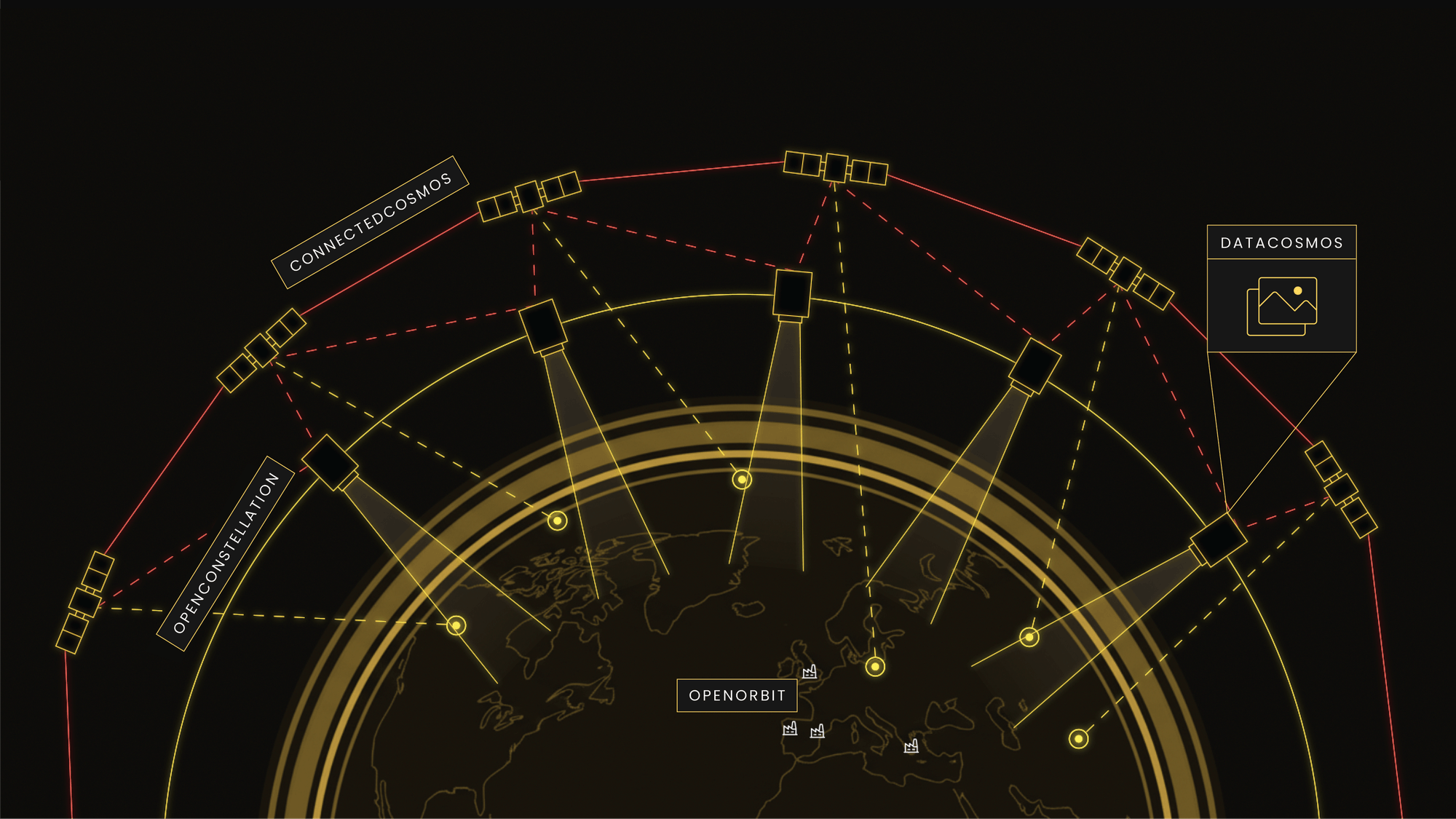
At the heart of the new Open Cosmos deployment is their multi-layer ConnectedCosmos LEO constellation. For the LiFi and optical tech community, the standout feature of this constellation is its reliance on Gatewayless Optical Routing.
Instead of relying heavily on traditional radio frequencies that require constant downlinking to ground stations, the ConnectedCosmos network is equipped with advanced Optical Inter-Satellite Links (OISLs). These "space lasers" will route encrypted military data directly between orbital nodes using focused beams of light.
Why does this matter for defense?
Unhackable by Design: Just like terrestrial LiFi, optical beams in space are incredibly difficult to intercept. You have to physically intercept the beam of light to access the data stream.
Bypassing the Ground: By routing data optically from satellite to satellite, the MoD can bypass intermediate ground station downlinks entirely. This effectively mitigates the severe security risks associated with tapping or severing subsea fibre-optic cables.
Fusing Light with Direct-to-Device
While light-based OISLs handle the heavy lifting of the constellation's space-based backbone, the network architecture is uniquely hybrid.
The optical data transport is combined with direct-to-device radio frequency interfaces and Internet of Things (IoT) sensing channels. This means tactical field units can ingest space-derived intelligence seamlessly on mobile terminals. Furthermore, the satellites feature onboard edge processing and sensor fusion, allowing the network to process IoT telemetry and imagery in orbit and route actionable targeting data directly through its optical links.
A Sovereign Digital Backbone
The TacSys procurement framework is a cornerstone of the MoD's broader £7.5 billion investment in its "Digital Backbone and Targeting Web" initiatives. By merging space-derived intelligence with rapid tactical decision-making, the UK is ensuring its military forces remain connected in highly contested electronic warfare environments where traditional RF signals might be jammed.
Rafel Jordà Siquier, Founder and CEO of Open Cosmos, highlighted the importance of this architecture:
“The British government recognises the need for a modern, sovereign-controlled satellite network over the UK, one which will not only deliver high speed connectivity, but one that offers secure data transfer and layered architecture options for future readiness. We want to meet users where they are, and our selection as a key partner in this programme is a stamp of approval that we are taking the right approach.”
The Big Picture for Optical Tech
For the broader LiFi and free-space optics industry, this £8 billion framework serves as a massive validation of light-based data transmission. As governments and militaries increasingly rely on lasers to secure their most sensitive orbital networks, the heavy R&D investments pouring into optical satellite components will inevitably accelerate the commercialisation of light-based communication technologies down here on Earth.

Credit to Open Cosmos