Wireless Endoscope Transmits Data via LiFi
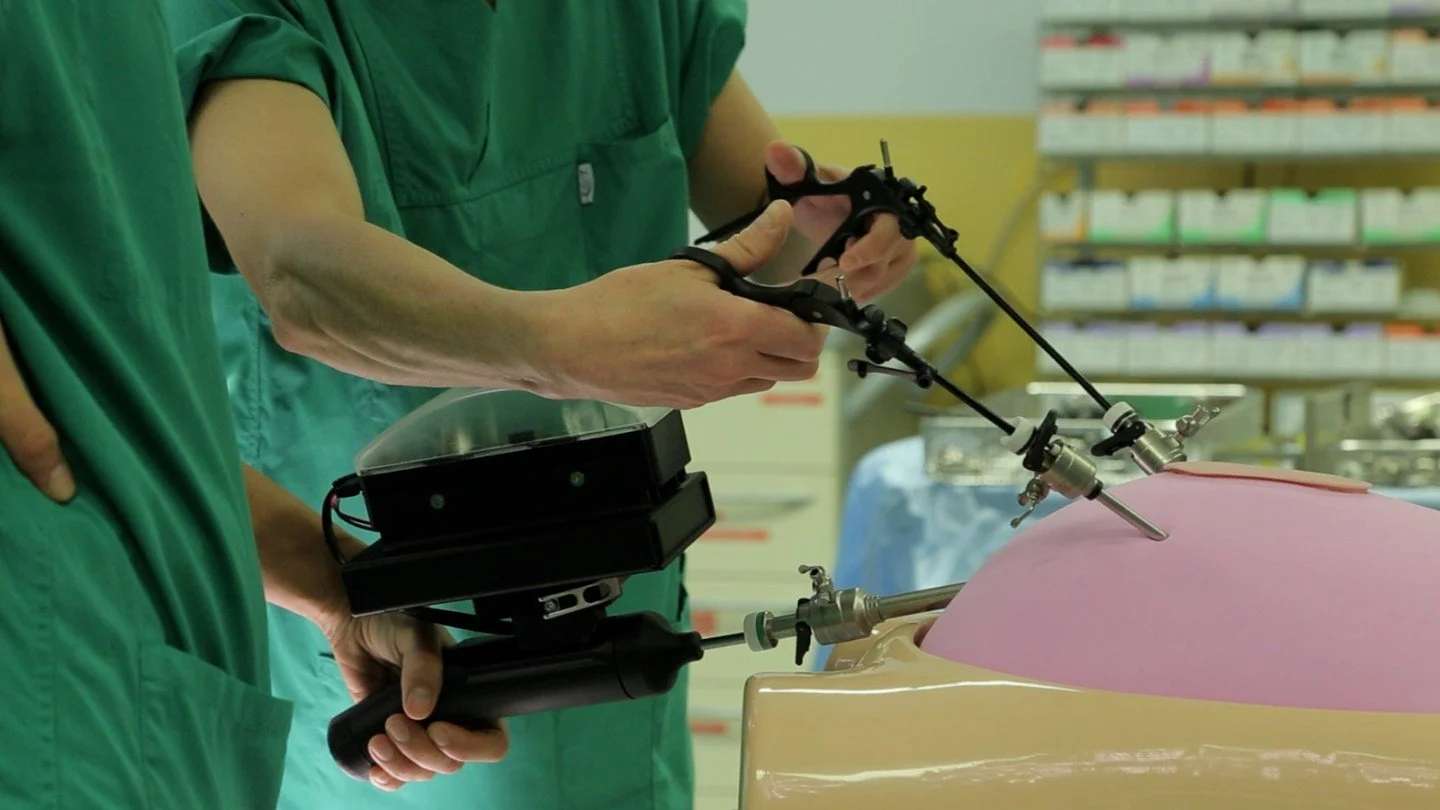
Image credit to Fraunhofer HHI
By LiFi Tech News Team
Researchers at the Fraunhofer Institute for Telecommunications (Heinrich-Hertz-Institut, HHI) and their partners (IT Concepts GmbH, Lahnau/Wetzlar and St. Joseph Krankenhaus Berlin-Tempelhof GmbH) in the OWIMED project are turning to Light Fidelity (LiFi) to make data cables in the operating room a thing of the past.
By developing a prototype for a wireless endoscope that uses modulated light to transmit images during laparoscopic procedures, the OWIMED team is solving one of the most frustrating bottlenecks in modern surgery.
The Problem: Taming the "Cable Spaghetti"
Currently, commercially available endoscopy systems are tethered by at least two distinct cables: a fibre-optic cord for lighting, and a power/data cable to stream live camera feeds to a monitor.
These cables introduce significant operational friction:
Hygiene Risks: Cables must be isolated with sleeves, draped over the patient, or dragged across the floor, making thorough cleaning and disinfection difficult.
Inefficiency: Cords create physical obstacles for the surgical team, slowing down operations and limiting mobility.
The Radio Wave Shortcoming: While wireless tech seems like the obvious fix, traditional radio systems (like Wi-Fi or Bluetooth) simply cannot meet the stringent medical requirements for latency, security, and absolute reliability.
The OWIMED Solution: Light as a Data Carrier
To overcome the limitations of radio waves, the OWIMED (Optical Wireless Communication for Medical Imaging Devices) project bypasses the RF spectrum entirely.
“Instead of radio waves, we use modulated LED light for wireless communication," explains Anagnostis Paraskevopoulos, a research scientist at Fraunhofer HHI and project lead. "Due to the locally limited propagation of light, wireless transmission with light (LiFi) is ideal for medical technology. We can already meet the requirements for high data rates over short distances.”
How it Works:
Integrated Optics: The team integrated an optical light source (an LED) and a compact, battery-operated LiFi module directly into the endoscope.
Overhead Receivers: LiFi receiver modules are installed on the surgical lights above the operating table, providing an optimal line-of-sight connection.
High-Speed, Invisible Data: A modulator switches the endoscope's LED on and off at speeds imperceptible to the human eye. A photodiode on the surgical light catches these pulses, converting them into an electrical signal that pushes a stunning 4K video feed to the monitor.
Bidirectional Control: The LiFi connection works both ways, allowing the surgical team to adjust the endoscope camera settings remotely from the monitor.
The LiFi modules are engineered for robust, high-speed connection, featuring a 180-degree radius for homogeneous signal propagation. Furthermore, an integrated camera chip ensures low-latency data compression, keeping power consumption remarkably low.
Real-World Validation
The technology is already moving beyond the lab. The surgical team at St. Joseph Krankenhaus in Berlin-Tempelhof, a key consulting partner throughout the project's development, tested the prototype in a simulated OR environment using a medical phantom.
The results were a resounding success. The LiFi solution performed exceptionally well in critical metrics: latency (data lag), reliability, data rates, light quality, and ergonomics. According to Paraskevopoulos, the feedback from surgeons was entirely positive, with doctors noting they would prefer the wireless LiFi system over the traditional cabled variant once it reaches full commercialisation.
What This Means for the LiFi Industry
The success of the OWIMED project is a massive milestone not just for medical tech, but for the LiFi industry as a whole. Here is why this development is a game-changer:
Proof of Mission-Critical Viability: Historically, skeptics have categorised LiFi as a niche alternative to Wi-Fi for standard office internet. This project proves that LiFi can reliably handle ultra-low latency, zero-fail, high-bandwidth applications (like live 4K surgical video) in environments where human lives are on the line.
Conquering EMI in Healthcare: Hospitals are notoriously dense with Electromagnetic Interference (EMI). Radio frequency (RF) bands are crowded and can interfere with sensitive life-saving equipment. LiFi entirely bypasses the RF spectrum, proving that optical wireless communication is the ultimate solution for EMI-sensitive environments.
Accelerating the Internet of Medical Things (IoMT): As operating rooms become more connected and data-heavy, the bandwidth limits of traditional Wi-Fi will become a bottleneck. By utilizing the vast, unregulated light spectrum, LiFi paves the way for a fully wireless, highly secure ecosystem of interconnected medical devices.
Security by Design: Because light cannot pass through opaque walls, the data transmitted during a surgery remains physically confined to that specific operating room. This inherent physical security provides a massive advantage over RF signals, which can be intercepted from outside the room.
Project OWIMED at a Glance
Full Name: Optical Wireless Communication for Medical Imaging Devices
Duration: February 2023 – April 2026
Funding: German Federal Ministry of Research, Technology and Space (BMFTR) under the KMU-innovativ program.
Partners: Fraunhofer Institute for Telecommunications, Heinrich-Hertz-Institut, HHI, Berlin (LiFi technology specialist & coordinator)
IT Concepts GmbH, Lahnau/Wetzlar (Endoscope development & imaging expertise)
St. Joseph Krankenhaus Berlin-Tempelhof GmbH, Berlin (Clinical testing & consultation)
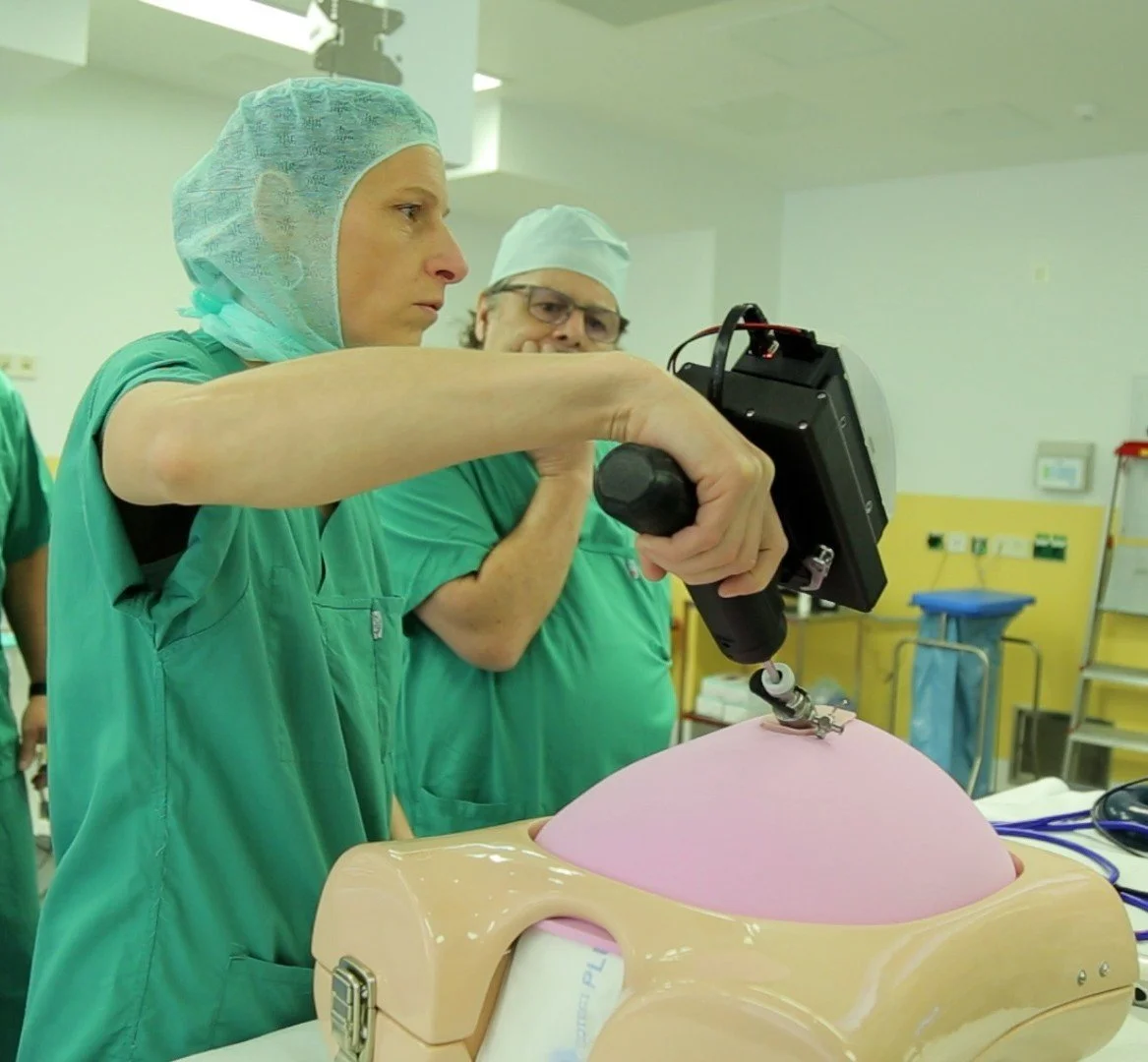
Image credit to Fraunhofer HHI